Top 5 Benefits of Using Artificial Grass Roll for Your Lawn?
In recent years, the popularity of Artificial Grass Roll has increased significantly. Many homeowners seek a beautiful lawn without the tedious upkeep. This synthetic option offers an attractive alternative to traditional grass.
Artificial Grass Roll provides several benefits. It saves time and effort while maintaining a lush green look. With no need for watering, you can conserve water and reduce your bills. Imagine a lawn that stays vibrant regardless of the weather. You won't need to spend hours mowing or fertilizing.
However, some may have concerns. Is the initial investment worth it? Will it feel as natural underfoot? These questions often come up. Ultimately, the choice of Artificial Grass Roll could change how you enjoy your outdoor space. Consider the long-term advantages, even if it seems daunting at first. Embracing this change could lead to a more enjoyable and stress-free lawn experience.
Advantages of Artificial Grass Rolls for Lawn Aesthetics and Maintenance
Artificial grass rolls offer many advantages for your lawn's aesthetics and maintenance. A vibrant green lawn can enhance the beauty of your outdoor space. Unlike natural grass, artificial turf remains lush and uniform throughout the year. You won't have to deal with brown patches or uneven growth. This consistency adds a professional look to residential or commercial landscapes.
Maintaining an artificial lawn is significantly easier compared to natural grass. It requires minimal watering, mowing, or fertilizing. This reduces water usage and saves costs on lawn care products. You can enjoy more free time without extensive upkeep. However, some homeowners struggle with initial installation. It's essential to ensure proper groundwork for a level surface.
Tip: When installing, consider the drainage system to prevent water accumulation. Also, opt for quality materials to enhance durability. Regular cleaning with a broom can keep the surface looking fresh. Be aware that artificial grass can heat up in direct sunlight, which might affect comfort for pets and children. Adjusting landscaping designs to provide shaded areas can improve usability.
Cost-Effectiveness of Installing Artificial Grass in Residential Areas
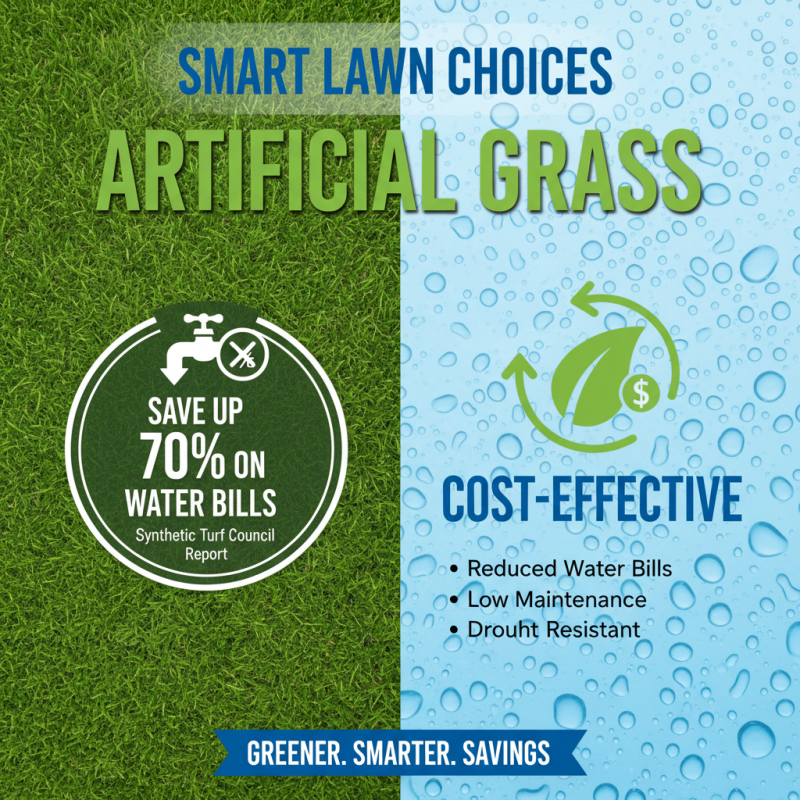
Artificial grass has become increasingly popular for residential lawns, especially due to its cost-effectiveness. According to a report by the Synthetic Turf Council, homeowners can save up to 70% on their water bills after installing artificial grass. This is a significant reduction, especially in areas facing drought.
Additionally, maintenance costs drop dramatically. Natural grass requires fertilizers, mowing, and pest control, which add up. A study indicated that a typical homeowner spends approximately $1,200 annually on lawn care. In comparison, artificial grass needs minimal upkeep, often requiring just occasional rinsing and brushing. This simplicity leads to more free time for homeowners.
However, critics argue that the initial installation cost of artificial grass can be high, sometimes exceeding $5 per square foot. While the long-term savings may offset this, the upfront investment can be challenging for some. Homeowners should weigh these factors carefully. It's crucial to evaluate the overall benefits and whether the short-term costs align with future savings. Balancing aesthetics with practicality is a delicate dance to perform.
Environmental Benefits of Choosing Artificial Grass Over Natural Turf
Artificial grass rolls offer significant environmental benefits compared to natural turf. One of the primary advantages is water conservation. A report from the Environmental Protection Agency (EPA) highlights that landscaping accounts for up to 50% of residential water usage. Switching to artificial grass can reduce this need by up to 70%. This means that homeowners can save thousands of gallons of water annually.
Additionally, artificial grass eliminates the need for harmful pesticides and fertilizers. According to the Centers for Disease Control and Prevention (CDC), these chemicals can contaminate groundwater and pose health risks. By choosing artificial grass, you contribute to reducing chemical runoff into waterways.
Another point to consider is waste reduction. Natural grass lawns require regular mowing, which produces significant amounts of organic waste. According to a study by the U.S. Department of Agriculture, yard waste represents nearly 13% of all municipal solid waste. Artificial grass, on the other hand, requires minimal maintenance and reduces the carbon footprint associated with lawn care. However, one must reflect on the long-term impacts of manufacturing and disposing of synthetic materials used in artificial lawns. Balancing these considerations is crucial for a sustainable choice.
Top 5 Environmental Benefits of Using Artificial Grass Roll for Your Lawn
Using artificial grass has numerous environmental benefits. The chart above illustrates how opting for artificial grass can conserve water, reduce the need for pesticides, save on maintenance costs, decrease carbon emissions, and promote biodiversity in your surroundings.
Durability and Longevity of Artificial Grass Compared to Natural Alternatives
Artificial grass rolls offer exceptional durability and longevity compared to natural lawns. They withstand heavy foot traffic and harsh weather conditions. Many homeowners worry about maintaining a lush lawn. With artificial grass, you avoid constant mowing and watering. This saves both time and resources.
One handy tip is to regularly clean your artificial grass. A simple rinse with water and a brush can keep it looking great. Debris can build up over time, and that can affect its appearance. Don’t let leaves and dirt stay for too long.
Another consideration is the initial investment of artificial grass. It may seem high at first. However, you save money over time with lower maintenance costs. Think about how much you spend on natural grass care each year. It adds up quickly. Taking a step back, reflect on what you truly want for your lawn. A beautiful, green space without the hassle could be worth it.
Top 5 Benefits of Using Artificial Grass Roll for Your Lawn
| Benefit |
Description |
Comparison with Natural Grass |
| Durability |
Artificial grass can withstand heavy foot traffic and harsh weather conditions without losing its integrity. |
Natural grass may wear down and requires more maintenance in high-traffic areas. |
| Low Maintenance |
No mowing, watering, or fertilizing required, saving time and costs. |
Natural grass needs regular upkeep, which can be time-consuming and expensive. |
| Water Conservation |
Reduces water usage significantly as no irrigation is needed. |
Natural grass requires frequent watering, which can lead to higher water bills. |
| Aesthetics |
Consistently green and vibrant appearance throughout the year. |
Natural grass can turn brown or patchy during droughts or cold seasons. |
| Safety |
Usually non-toxic and allergen-free, providing a safe play area for children and pets. |
Natural grass may harbor pests and allergens, posing health risks. |
Ease of Installation and Versatility in Landscape Design with Grass Rolls
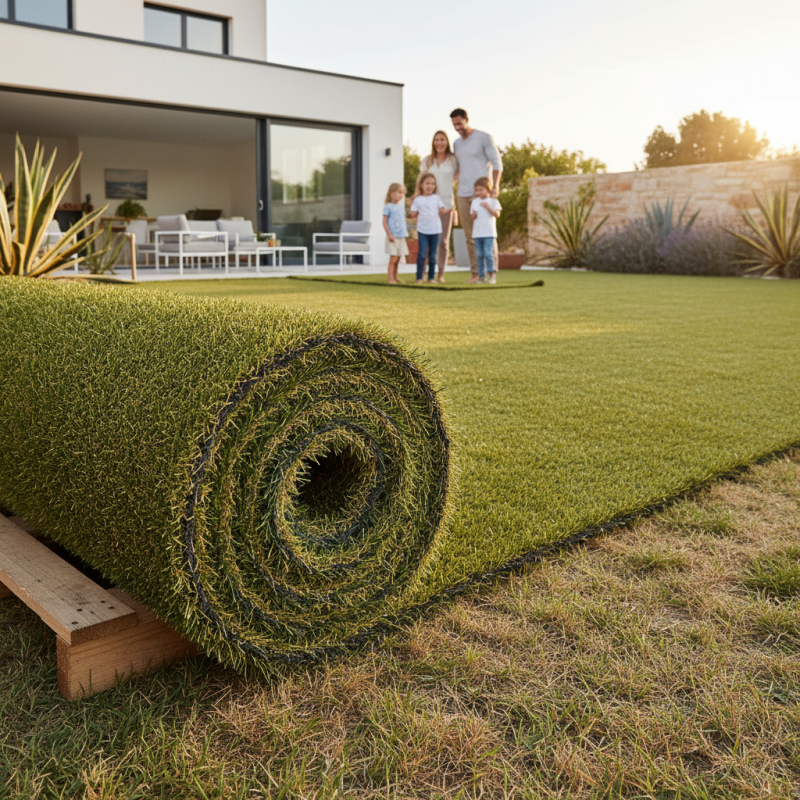
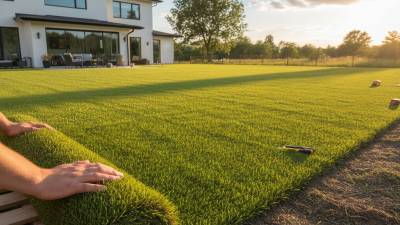
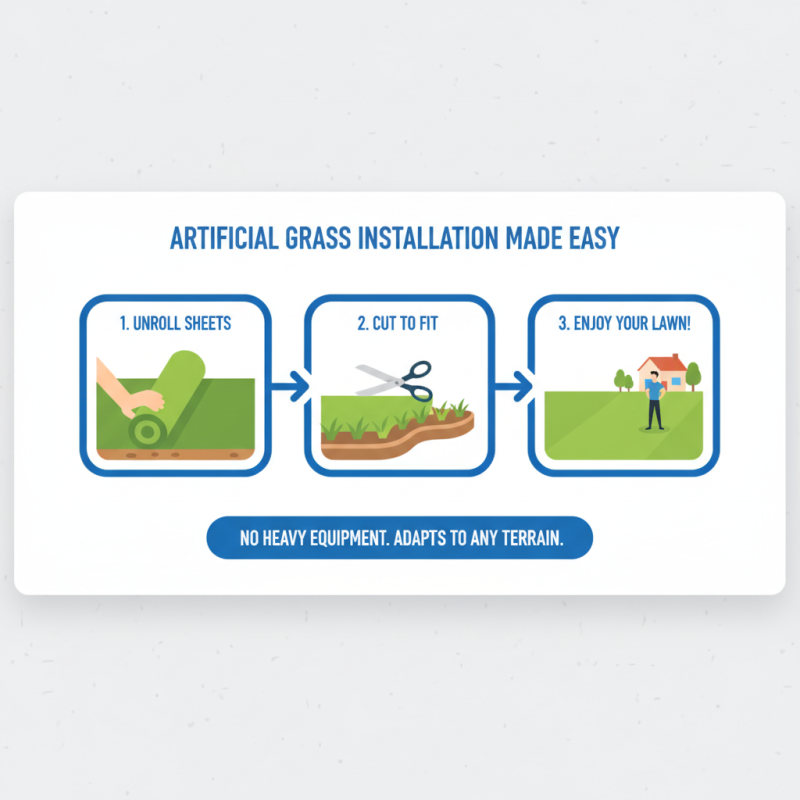
Artificial grass rolls bring remarkable ease to lawn installation. They come in large sheets, making it simple to lay over a variety of surfaces. Whether you have a flat yard or an uneven terrain, grass rolls adapt well. Just unroll and cut to fit. It’s that easy. No heavy equipment is needed.
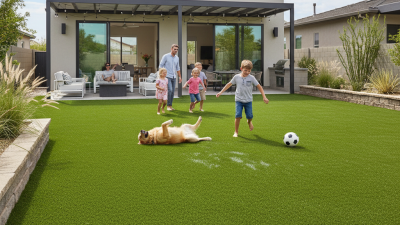
For versatility, think of all the design possibilities. Create playful areas for kids or a quiet nook for relaxation. You can even mix different colors and textures to enhance your outdoor space. It’s a canvas for creativity. However, ensure proper planning to avoid miscalculations. Measure accurately to get the right size.
Tips: Always test a small area first. This helps you visualize the project. If unsure, consult a friend or expert. Mistakes can turn costly. Additionally, consider edges carefully. They must be secure to prevent fraying. A well-done edge enhances beauty and durability. Balancing creativity with practical know-how is key.