How to Choose the Best Grass Turf for Your Landscape Needs?
Choosing the best Grass Turf for your landscape is crucial. It impacts aesthetic appeal and functionality. Expert Mark Sullivan, a renowned turf specialist, states, "Selecting the right Grass Turf can transform your outdoor space."
When selecting Grass Turf, consider your climate, sunlight, and soil conditions. Different grasses thrive in different environments. For instance, fescue is great for shade, while Bermuda prefers sunny areas. Mistakes occur when homeowners buy without understanding these needs.
Additionally, maintenance requirements vary significantly. Some Grass Turfs need more watering and mowing than others. This can affect your long-term satisfaction and commitment. Reflecting on how much time you're willing to invest is essential. Prioritizing your landscape goals will guide you in making the best choice.
Factors to Consider When Choosing Grass Turf for Your Landscape
Choosing the right grass turf for your landscape requires careful consideration.
Start by assessing your climate. Different grass types thrive in various weather conditions. For instance, warm-season grasses prefer heat. In contrast, cool-season varieties flourish in cooler areas. This fundamental difference impacts your lawn’s health and growth.
Next, think about your lawn's purpose. Is it for recreation, aesthetics, or erosion control?
High-traffic areas demand durable grass. Ornamental lawns require finer textures. Additionally, consider sunlight levels. Some grasses need full sun to thrive, while others tolerate shade.
It's not just choosing the prettiest option; practicality matters too.
Watering and maintenance should also guide your decision. Drought-resistant types can save water. However, some grasses require regular irrigation and care.
Reflect on your available time and resources. A lawn is often a long-term commitment. Selecting the right turf will ultimately reward you with a lush, vibrant outdoor space.
Make sure to weigh all these factors carefully to find the best match for your needs.
Types of Grass Turf: Cool-Season vs. Warm-Season Grasses
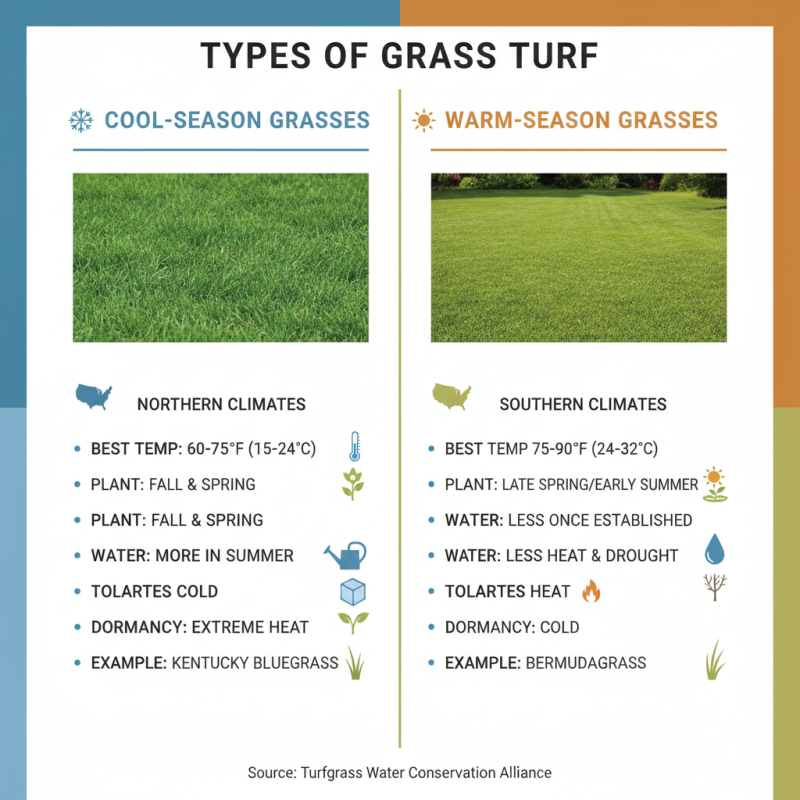
Choosing between cool-season and warm-season grasses is critical for optimal landscape health. Cool-season grasses, such as Kentucky bluegrass, thrive in northern climates. They grow best in temperatures of 60-75°F. According to the Turfgrass Water Conservation Alliance, these grasses are ideal for fall and spring planting, requiring more water during hot summers. They can withstand cold winters but may become dormant in extreme heat.
On the other hand, warm-season grasses like Bermuda and Zoysia flourish in southern regions. They prefer temperatures between 80-95°F and establish well in late spring. The University of Georgia's Turfgrass Research group notes these grasses have deeper roots, increasing drought resistance. However, their growth slows or halts in cold temperatures, leading to potential bare spots in winter.
Both types offer unique benefits and drawbacks. The choice largely depends on climate and maintenance preference. Understanding your local environment is essential. Factors like soil quality and rainfall patterns can significantly impact your decision. The right grass turf can enhance your lawn's resilience and aesthetic appeal, but it requires careful consideration of local climate conditions.
Assessing Soil Quality and Sunlight Exposure for Grass Selection
Assessing soil quality is essential when selecting grass turf. Begin by testing the soil pH and nutrient levels. Healthy soil often has a pH between 6.0 and 7.5. Assessing texture is also crucial; loamy soil typically supports grass growth better than sandy or clay soils.
Sunlight exposure greatly influences grass selection. Assess the areas where the grass will grow. Full sun zones receive at least six hours of sunlight daily, while shady areas get less. Different grass types thrive in varying light conditions. For example, Kentucky bluegrass flourishes in sunlight, while fescue handles shade better.
Tips: Consider blending grass types if your landscape has diverse light conditions. This approach can enhance resilience against pests and diseases. Regularly monitor your lawn for growth patterns and adjust your care routine based on sunlight changes throughout the seasons. Growth may not be perfect; be prepared for patchy areas that seek your attention. Adjusting your watering and mowing habits can lead to improvements over time.
Choosing the Best Grass Turf for Your Landscape Needs
Maintenance Requirements for Different Grass Turf Varieties
When choosing grass turf for your landscape, maintenance is key. Different varieties have varying requirements that can impact your choices. According to the Turfgrass Producers International, cool-season grasses like Kentucky bluegrass thrive in northern climates. They require regular watering and mowing, demanding more care in the growing months. Such grass types need about 1 to 1.5 inches of water weekly, ensuring robust root systems.
On the other hand, warm-season grasses, such as Bermuda and Zoysia, are ideal for southern regions. They are drought-tolerant but require consistent mowing during their peak growing season. Interestingly, their maintenance can be lower in terms of watering, needing about 0.5 to 1 inch of water weekly once established.
**Tip:** Always consider the climate and seasonal variations in your area before choosing a grass type for your lawn.
It’s crucial to reflect on your lifestyle when planning your turf. Do you have time for the weekly upkeep that a lush lawn demands? If not, consider a native grass blend, which typically requires less water and fewer inputs. These grasses often adapt better to local conditions and contribute to local biodiversity.
**Tip:** A soil test can help determine the best grass type for your landscape’s specific conditions.
How to Choose the Best Grass Turf for Your Landscape Needs? - Maintenance Requirements for Different Grass Turf Varieties
| Grass Type |
Sunlight Requirement |
Watering Needs |
Mowing Frequency |
Fertilization Frequency |
Durability |
| Bermudagrass |
Full Sun |
Moderate |
Every 1-2 weeks |
Every 6-8 weeks |
High |
| Tall Fescue |
Partial Shade to Full Sun |
Low |
Every 2-3 weeks |
Every 8-10 weeks |
Medium |
| Kentucky Bluegrass |
Full Sun to Partial Shade |
Moderate to High |
Every week |
Every 4-6 weeks |
High |
| Zoysiagrass |
Full Sun to Partial Shade |
Moderate |
Every 1-2 weeks |
Every 8 weeks |
Medium to High |
| Fine Fescue |
Partial Shade |
Low |
Every 3 weeks |
Every 10-12 weeks |
Low |